In development · Seeking funding
A
new
computer.
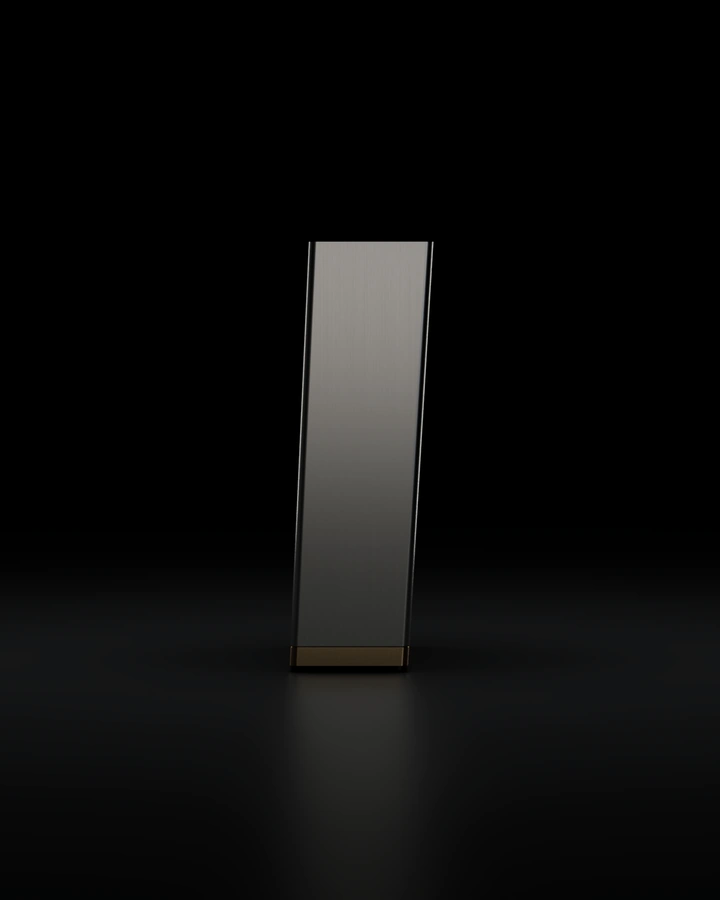
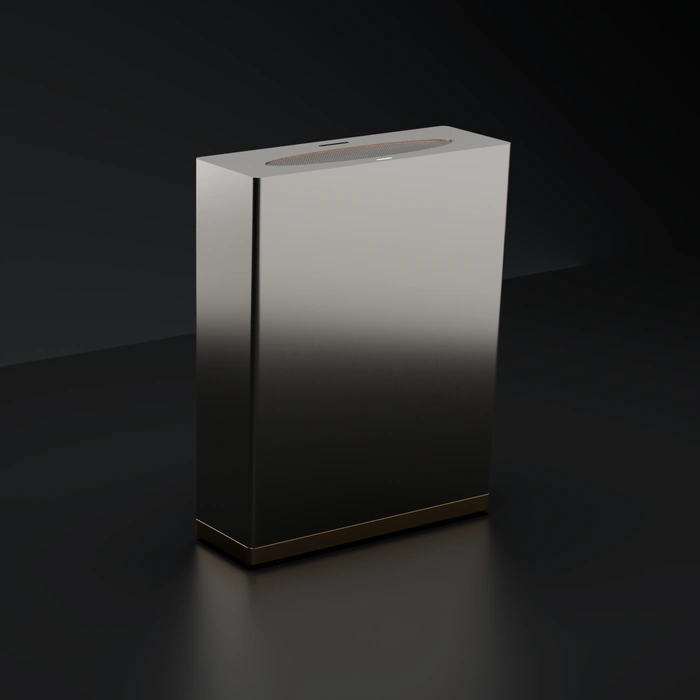
Ameka One is the computer we're designing to keep a frontier AI model on your desk: 2 TB of memory in one pool, inside a silent copper slab with no fan. It hasn't been built yet. We're raising money to build it.
01 — Why
For forty years we built
computers for people.
Then we asked them
to host another mind.
It deserves its own.
02 — The Machine
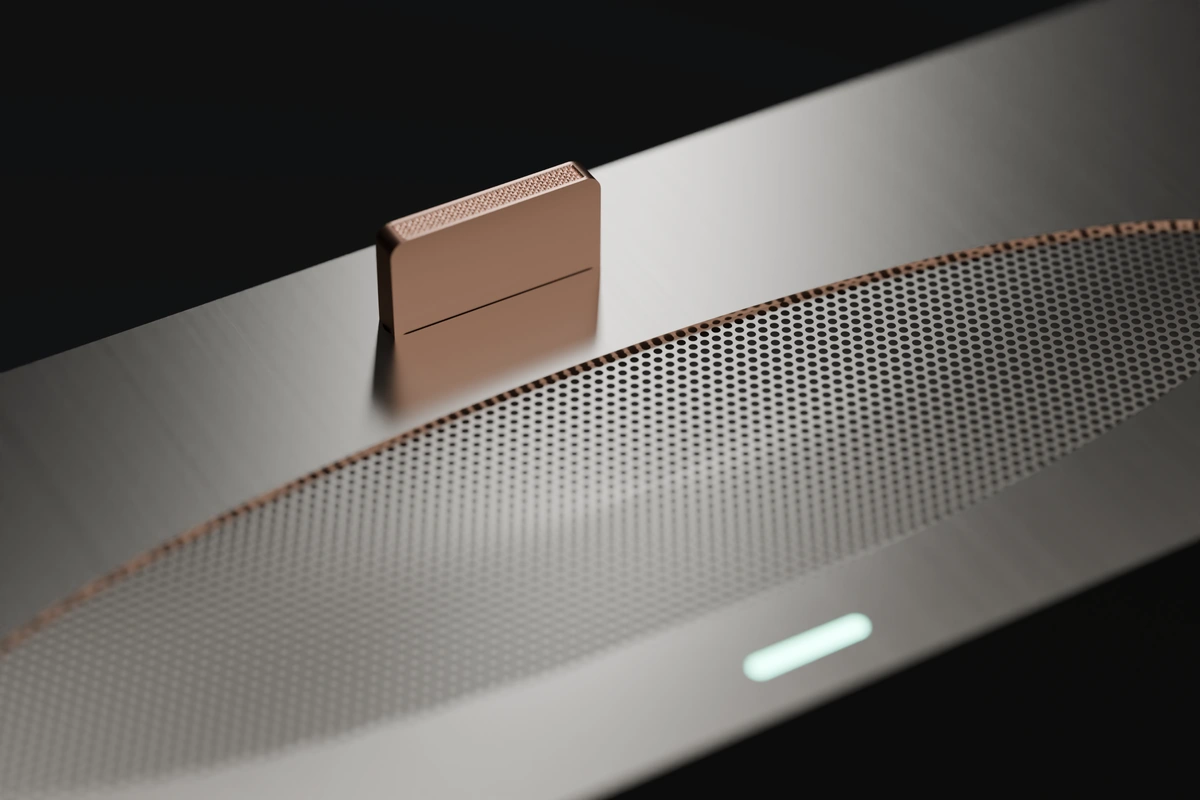
One object. Five ways of seeing it.
03 — Architecture
Four pillars. One design.
P / 01 Compute
Neural fabric
An AI processor with 128 tensor tiles on a 3 nm-class process, joined by a mesh network on the chip. It runs FP4 natively, the precision today's largest open models ship in.
1 PFLOPS FP4 · target
P / 02 Memory
One address space
2 TB of LPDDR6 in one pool, shared by the CPU and the tensor tiles. There's no PCIe wall and no copying between host and device. A model loads once and stays loaded.
1.6 TB/s · target
P / 03 Operating System
Ameka OS
The operating system we're designing for it. Models are first-class processes. Memory is content-addressed. Privacy is enforced from the silicon up.
In development
P / 04 Privacy
Local by default
Every model runs on the machine itself. Nothing leaves it unless you send it. The model on your desk forgets nothing, and tells no one.
No cloud required
04 — Design targets
The numbers, honest.
Ameka One hasn't been built, so nothing below has been measured. These are the design targets for the first production units, which we're aiming to ship in 2028. As prototypes are built, we'll publish how they measure against them.
2TB
Unified memory
LPDDR6 in one pool. Holds today's largest open model, Kimi K3 (2.8 trillion parameters), at 4-bit with room to spare.
1.6TB/s
Memory bandwidth
This sets how fast a large model writes. The fastest Mac Studio today does 1.2 TB/s.
1PFLOPS
AI compute
Dense FP4 across 128 tensor tiles, or 2 PFLOPS counted with sparsity the way NVIDIA quotes it.
150W
Sustained power
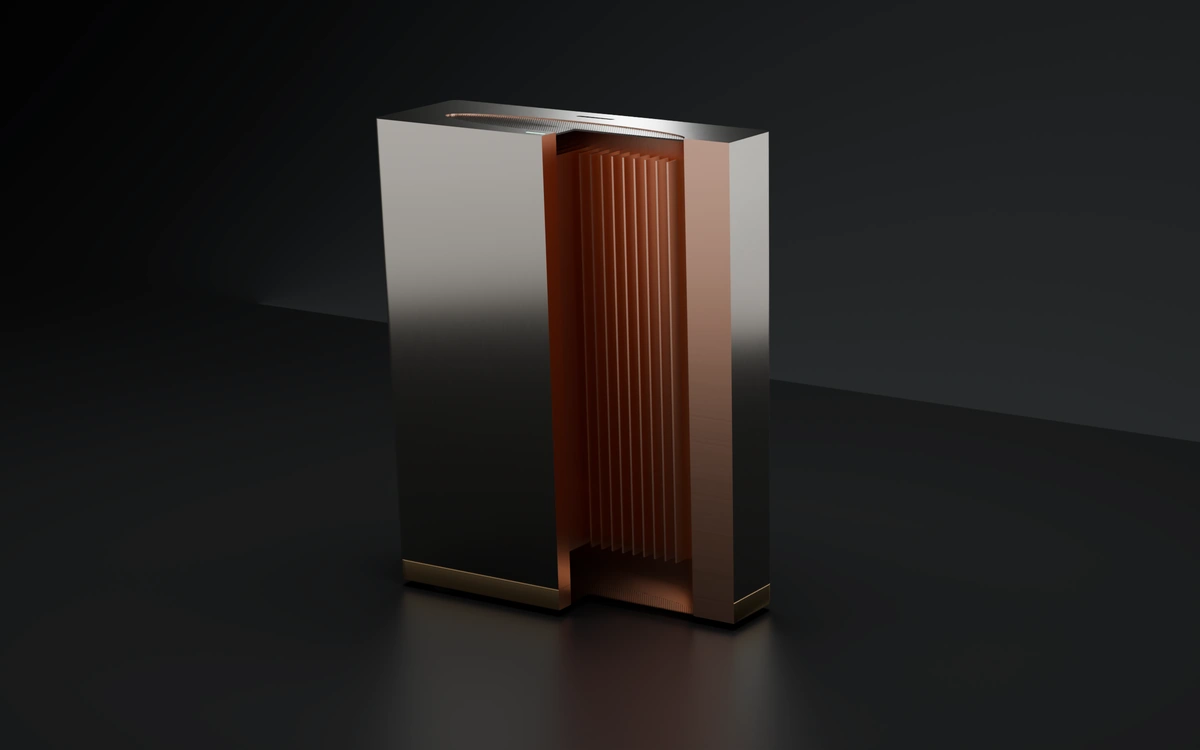
No fan. A copper chimney does the cooling. Runs from an ordinary wall socket.
<18dBA
Noise
At 30 cm under full load, which is quieter than a quiet room.
6.7L
Size
312 × 240 × 92 mm and 7.2 kg. It leans 3° toward you.
2×200Gb/s
Links
Join two Amekas with one cable to run a model twice the size.
2028
First units
Our target. It depends on funding, and we'll update it as we go.
Where it sits.
Ameka One isn't built to out-train a data-center GPU. It's built to hold the biggest open models on one silent desk machine. Here is the target next to what you can buy today.
| Machine | Memory | Bandwidth | AI compute (FP4) | Power | Fan | Price |
|---|---|---|---|---|---|---|
| Ameka OneTarget · 2028 | 2 TB | 1.6 TB/s | 1 PFLOPS dense | 150 W | None | Not set |
| Apple Mac Studio, M5 Ultra | Up to 512 GB | 1.2 TB/s | Not published | 385 W max | Yes | From $5,499 |
| NVIDIA DGX Spark | 128 GB | 273 GB/s | 1 PFLOPS with sparsity | 240 W supply | Yes | $4,699 |
| NVIDIA DGX Station (GB300) | 748 GB (252 GB HBM3e + 496 GB LPDDR5X) | 7.1 TB/s HBM · 396 GB/s LPDDR5X | 15 PFLOPS dense | 1,600 W | Yes | About $95,000 and up |
Sources: Apple's Mac Studio specifications and newsroom (August 2026), NVIDIA's DGX Spark and DGX Station pages, NVIDIA's February 2026 Spark price change, and reseller listings for DGX Station, all checked September 2026. The 512 GB Mac Studio ships in late October 2026. NVIDIA publishes no DGX Station price. Kimi K3's 2.8 trillion parameters come from Moonshot AI's model card. Ameka One's figures are targets, not measurements. The 150 W figure comes from our own thermal model of the chimney; the best fanless PCs of this size shed about 100 W today, and the first thing the seed money tests is whether we can beat it.
05 — Operating System · Coming soon
Goos, the super intelligent operating system.
Goos OS is the operating system we're designing for Ameka One, and it's coming soon. It's built for AI and for the people who use it. Frontier reasoning models do much of the drafting, and people review every line. Every primitive, from process and file to network and identity, is being redesigned for a world where AI agents do real work.
First-class
Models are processes. They schedule, log and inherit identity like any other.
Content-addressed
Files are hashed. The OS never re-reads what it already knows.
Attested
Every model run can be signed by the chip's root of trust.
Composable
Tool use, MCP and agent runtimes are part of the kernel, not bolted on.
In development · Seeking funding
Where it stands.
Ameka One is a design today. We're raising a seed round to build it. We're not taking reservations or deposits, because we won't take anyone's money for a machine that doesn't exist yet.
Now
Design and seed round
The design intent and targets are published, and the thermal model is done. We're raising the seed round.
First, once funded
Prove the cooling
A copper chimney test rig at 150 W, a full-size foam model, Key samples and a seam study.
Next
First prototype
A working machine, measured against every target on this page, with the results published in Bench Notes.
Target · 2028
First units
Production depends on funding. We'll give a date when we can keep it.
No reservations, no deposits. Just a note when there's hardware to show.
A new kind of mind
deserves a new kind of machine.
We're raising a seed round to build it.
Pasadena, California · 2026
Pasadena, California · 2026